
What Is a Cannabis Vape and How Does It Work?

by Trapstars Team | October 11, 2026
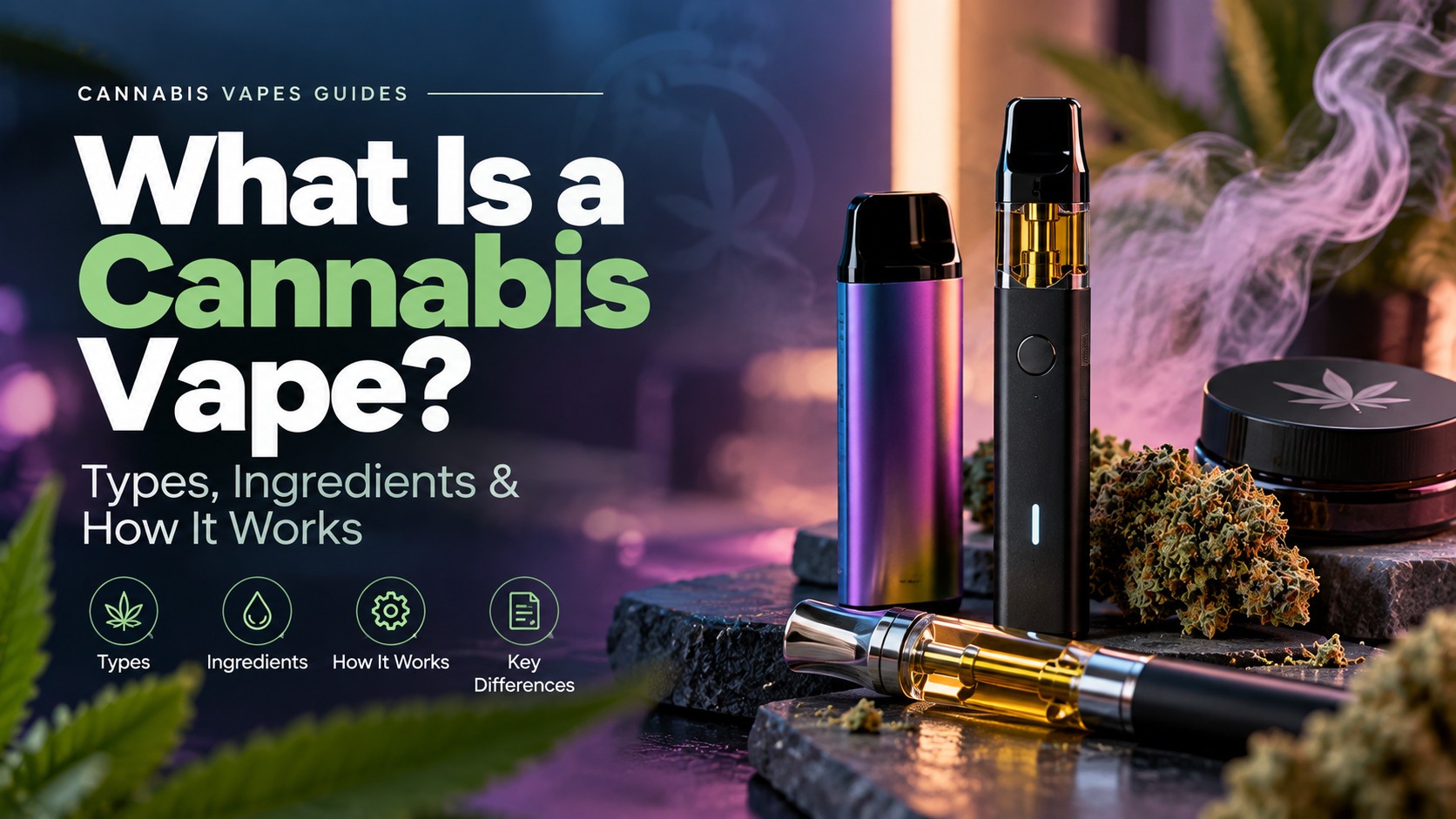
A cannabis vape is an electronic device that heats cannabis oil, extract, or plant material to produce an inhalable aerosol. Unlike conventional cannabis joints, these devices use a heating element rather than directly burning a paper-wrapped product.
However, cannabis vapes vary in construction, ingredients, and regulatory classification. Understanding the technology helps explain common terms such as cartridges, disposables, atomizers, and concentrates.
This guide explores how cannabis vapes work, their main components, product types, labeling terminology, and important safety considerations.
What Is a Cannabis Vape?
A cannabis vape, sometimes called a marijuana vape or THC vape, is a device designed to heat cannabis material and produce an aerosol.
The material may be a cannabis extract, an oil-based formulation, or dried cannabis flower. Consequently, the term describes a broad category of devices rather than one specific product.
Many cannabis vapes resemble electronic pens or compact handheld devices. However, appearance alone does not establish what the device contains. Some systems use removable cartridges, while others combine the heating system and cannabis material in a single unit.
Cannabis vaping also differs from conventional smoking. A pre-roll burns cannabis plant material and its wrapper. In contrast, a vaporizer uses a heating system to generate aerosol from the material inside its chamber or cartridge.
For a closer look at the combustion-based format, see our guide to cannabis pre-roll types and ingredients, including the differences between standard and infused pre-rolls.
The word “vapor” can be misleading because the resulting aerosol is not necessarily harmless water vapor. It may contain cannabinoids, other chemicals, and substances produced during heating.
How Does a Cannabis Vape Work?
Most cannabis vapes use a powered heating element to raise the temperature of cannabis material or extract. As the material heats, volatile compounds enter the air and form an aerosol. The device then channels that aerosol through a mouthpiece.
Although different devices use different designs, the underlying technology involves three basic functions: supplying energy, transferring heat, and producing aerosol. The process is electronic rather than dependent on a continuously burning joint.
The Role of the Battery
Many portable cannabis vapes contain a rechargeable battery. The battery supplies electrical energy to the heating system, allowing the device to generate heat.
Battery capacity and design vary between products. Some devices use integrated power systems, while others have separate batteries and cartridges. These differences affect device construction but do not necessarily identify the cannabis material inside. Battery-powered devices also introduce electrical and thermal safety considerations.
Therefore, device quality and component integrity are relevant independently of the cannabis formulation.
The Heating Element or Atomizer
The heating element is responsible for transferring energy to the cannabis material. In cartridge-based systems, this component is often called an atomizer. An atomizer generally contains a heating structure that warms the material near it.
Depending on the design, the system may use a metal coil, ceramic components, or other heating technologies.
Heating can also produce unwanted chemical changes. The composition of the resulting aerosol depends partly on the ingredients and the conditions under which they are heated.
Consequently, an atomizer's role is more complicated than simply converting liquid into harmless steam.
How Aerosol Is Produced
When cannabis extract or plant material is heated, certain compounds enter the surrounding air. As the heated material cools, it can form tiny suspended droplets or particles, collectively described as an aerosol.
This aerosol may contain THC, other cannabinoids, terpenes, and additional substances. Its exact composition depends on the formulation and device.
Unlike pure water vapor, cannabis vape aerosol can contain compounds that affect respiratory health. Therefore, the distinction between aerosol and water vapor is important when describing cannabis vape technology.
What Are the Main Parts of a Cannabis Vape?
Cannabis vape devices generally contain several components that perform different functions. However, the physical arrangement varies between cartridge systems, disposable devices, and dry-herb vaporizers.
Understanding these parts makes it easier to interpret product descriptions without assuming that every vape uses the same design.
Some products combine several components into one assembly. Others separate the power source from the cannabis-containing cartridge.
For example, an all-in-one device may integrate the battery, heating element, and extract container. A cartridge system typically separates the cartridge from the power unit.
These construction differences explain why the term “cannabis vape” cannot identify one universal device design.
What Types of Cannabis Vapes Are There?
Cannabis vapes can be classified according to their hardware and the material they heat. Three common categories are cartridge-based devices, all-in-one disposable devices, and dry-herb vaporizers. Although they share the general concept of electronically heating cannabis material, their internal construction differs.
Cannabis Vape Cartridges
A cannabis vape cartridge is a container designed to hold a cannabis extract formulation. It typically includes a heating assembly and connects to a compatible power source.
Cartridges are often associated with cannabis oil or concentrate products. However, the term “cartridge” identifies the container and device format rather than one specific extract.
Different cartridges may contain different cannabinoid profiles, terpene formulations, and other ingredients. Therefore, the hardware format does not establish the product's chemical composition.
Disposable or All-in-One Cannabis Vapes
An all-in-one cannabis vape combines the cannabis-containing chamber or reservoir with the device's power and heating components. The unit is generally sold as an integrated product.
Some all-in-one products are described as disposable. However, the word “disposable” refers to the product's intended lifecycle, not necessarily whether its battery can be recharged.
These devices can vary in battery design, material composition, and internal components. Consequently, two disposable vapes may differ significantly despite sharing the same general category. Electronic waste and battery disposal are also relevant considerations for integrated devices.
Dry-Herb Cannabis Vaporizers
A dry-herb vaporizer heats cannabis plant material rather than a prefilled oil cartridge. The material is placed in a chamber designed for heating dried flower.
Some devices transfer heat through direct contact with heated surfaces. Others use heated air or a combination of methods. Because the material differs from a cartridge formulation, dry-herb vaporizers should not automatically be grouped with cannabis oil pens in technical explanations.
Dry-herb devices use a different source material from oil cartridges. Our guide to cannabis flower types, labels, and terminology explains the plant material and common terms used to describe it.
Furthermore, heating dried plant material can produce different aerosol constituents depending on the device and conditions.
Cannabis Vape Device Comparison:
| Feature | Cartridge vape | All-in-one vape | Dry-herb vaporizer |
|---|---|---|---|
| Typical material | Cannabis extract | Cannabis extract | Dried cannabis flower |
| Power source | Usually separate battery | Integrated battery | Integrated or replaceable battery |
| Material container | Removable cartridge | Built-in reservoir | Heating chamber |
| Heating system | Cartridge atomizer | Integrated atomizer | Plant-material heating chamber |
| Primary distinction | Modular construction | Integrated construction | Different cannabis material |
What's Inside a Cannabis Vape Cartridge?
Cannabis vape cartridges commonly contain cannabis-derived extracts. However, their precise formulations can differ according to the extraction method, cannabinoid content, and added ingredients.
Some formulations contain highly concentrated THC. Others may contain CBD or combinations of cannabinoids. The term “cannabis vape” therefore does not guarantee a particular cannabinoid profile.
Terpenes may also be present. These aromatic compounds occur naturally in cannabis and many other plants. Manufacturers may preserve or add terpene formulations, depending on the product.
Additional ingredients require particular attention because not every substance considered suitable for eating or topical use is appropriate for inhalation.
Michigan's Cannabis Regulatory Agency has specifically addressed certain additives in vape products. Its guidance identifies vitamin E acetate and medium-chain triglyceride (MCT) oil as substances requiring targeted testing in regulated vape cartridges.
Therefore, understanding a cartridge requires more than identifying its THC percentage. The complete formulation, applicable testing, and product-specific information also matter.
What Do Distillate, Live Resin, and Rosin Mean in Cannabis Vapes?
Cannabis vape descriptions frequently reference distillate, live resin, and rosin. These terms generally relate to how cannabis extracts are produced and characterized. However, they should not be treated as universal measures of safety or quality.
Cannabis Distillate
Distillate is a refined cannabis extract produced through processing that separates and concentrates certain compounds. Cannabis distillate products may emphasize a particular cannabinoid, such as THC. However, the word “distillate” does not provide a complete ingredient list. Different formulations can include additional compounds.
Live Resin
Live resin is a cannabis extract generally associated with processing fresh-frozen cannabis material. The term refers to characteristics of the source material and extraction approach.
Live resin products may contain cannabinoids and aromatic compounds, but their exact composition varies. Therefore, the label alone does not establish a standardized terpene concentration.
Rosin
Rosin is a cannabis concentrate associated with solventless extraction methods that use heat and pressure. Some vape products incorporate rosin-based formulations.
Nevertheless, “solventless” describes an extraction characteristic. It does not mean the final aerosol is free from health risks or that every product has identical ingredients.
These three terms deserve their own future comparison article. Here, their purpose is to clarify terminology commonly encountered in cannabis vape descriptions.
How Are Cannabis Vapes Different From Cannabis Pre-Rolls?
Cannabis vapes and pre-rolls represent different inhalable cannabis product formats. The central distinction concerns how the material is heated and what form of cannabis the product contains.
A conventional pre-roll burns cannabis flower inside rolling paper. A vape instead uses a heating system to generate aerosol from cannabis extract or plant material.
| Feature | Cannabis vape | Conventional cannabis pre-roll |
|---|---|---|
| Heating method | Electronic heating | Combustion |
| Typical material | Extract or dried flower | Cannabis flower or other plant material |
| Main hardware | Battery and heating system | Rolling paper and optional tip |
| Output | Aerosol | Smoke |
| Product variations | Cartridges, disposables, dry-herb devices | Regular, infused, singles, multipacks |
| Health considerations | Aerosol constituents and device-related risks | Smoke exposure and combustion-related risks |
Neither category should automatically be described as harmless. The CDC identifies health concerns involving both cannabis smoke and cannabis vaping products.
How to Read Cannabis Vape Product Labels
Cannabis vape labels can contain information about cannabinoids, ingredients, manufacturing, testing, and regulatory traceability. However, the presentation may vary depending on the product and applicable requirements.
| Label term | What it generally means |
|---|---|
| THC | Tetrahydrocannabinol, the main intoxicating cannabinoid in cannabis |
| CBD | Cannabidiol, a cannabinoid without THC's characteristic intoxicating effects |
| Cannabinoid concentration | Reported amount or proportion of particular cannabinoids |
| Net contents | Declared quantity of material in the product |
| Ingredients | Substances included in the formulation |
| Terpenes | Aromatic compounds present in the product |
| Batch or lot number | Identifier associated with production or tracking |
| Testing date | Date associated with laboratory testing |
| Licensee information | Details identifying a regulated cannabis business |
The most useful approach is to distinguish chemical composition from device characteristics and compliance information.
A cannabinoid percentage does not reveal every ingredient in the formulation. Similarly, a product name such as “live resin” does not replace the need for accurate labeling.
Testing dates can be particularly relevant when regulatory requirements change. Michigan's MCT oil testing rules provide a clear example.
How Does Michigan Regulate Cannabis Vape Testing?
Michigan's Cannabis Regulatory Agency oversees testing within the state's licensed cannabis market. Its Scientific Section supervises licensed safety compliance facilities responsible for regulated product testing.
Cannabis vape products are subject to applicable testing requirements, including rules addressing certain contaminants and ingredients. These requirements have evolved as regulators identify additional concerns.
One important development involved medium-chain triglyceride oil, commonly called MCT oil.
Michigan's MCT Oil Testing Requirement
On June 27, 2024, the Michigan Cannabis Regulatory Agency announced a new MCT oil testing requirement for marijuana vape cartridges, effective October 1, 2024, in its official regulatory announcement.
MCT oil is commonly derived from coconut or palm oil and appears in some food and supplement products. However, the CRA warned that aerosolized and inhaled MCT oil may pose respiratory health risks.
The agency's September 24, 2024 technical bulletin identified both vitamin E acetate and MCT oil as target analytes for vape cartridges. Consequently, Michigan's vape testing framework addresses ingredients that may create concerns specifically when inhaled.
Why Does the Testing Date Matter?
On April 24, 2025, the CRA issued a public health and safety advisory reminding consumers about Michigan's MCT oil testing requirement.
The agency explained that vape cartridges tested before October 1, 2024, might contain MCT oil because the newer testing requirement had not yet taken effect.
The CRA also stated that regulated vape cartridges in Michigan's licensed cannabis market should include a testing date on their packaging. This example demonstrates why testing information should be interpreted in its regulatory context. A product tested under an earlier framework may not have been evaluated for every substance added to later testing requirements.
What Do Michigan Vape Recalls Tell Us?
Michigan has issued recalls involving vape products that contained MCT oil.
For example, on August 27, 2025, the CRA announced a recall involving 5,765 vape cartridges produced by Exclusive Brands in Ann Arbor. Subsequent testing identified MCT oil in the affected products.
The recall demonstrates that regulatory oversight can identify problems after products have entered the market. It also shows why batch identifiers and traceability information are important.
However, an individual recall should not be interpreted as proof that all products in the same category contain the same ingredient. Current product recall information is available through the CRA's official recall notices.
What Are the Health and Safety Considerations of Cannabis Vaping?
Cannabis vaping presents health considerations involving both the substances inhaled and the electronic devices used. Although vaporization differs from combustion, the absence of a burning joint does not establish that inhalation is safe.
The CDC warns that cannabis oils and concentrates used in vaping may contain highly concentrated THC. They may also contain additives or contaminants that could be harmful.
The precise risks depend on the product and circumstances. Therefore, broad claims that all cannabis vapes are harmless or equally dangerous would be misleading.
The precise risks depend on the product and circumstances. Therefore, broad claims that all cannabis vapes are harmless or equally dangerous would be misleading.
Cannabis Vape Aerosol Is Not Harmless Water Vapor
The aerosol generated by a cannabis vape may contain cannabinoids, terpenes, and other chemical constituents. Heating can also change the chemical composition of certain ingredients.
Consequently, the term “vapor” should not be interpreted as evidence that only water is being inhaled. Research into cannabis vaping continues to develop. Long-term health outcomes cannot be reduced to a simple comparison with smoking or nicotine vaping.
What Was the EVALI Outbreak?
EVALI stands for e-cigarette or vaping product use-associated lung injury. During 2019 and 2020, the United States experienced a major outbreak of severe lung injuries associated with vaping products.
According to the CDC, 2,807 hospitalized EVALI cases or deaths had been reported by February 18, 2020. The agency also confirmed 68 deaths. Investigations strongly linked vitamin E acetate to the outbreak, particularly in THC-containing vaping products. However, the CDC did not rule out contributions from other chemicals in every case.
These findings led to greater attention to product ingredients, contamination, and inhalation safety.
Are Regulated Cannabis Vapes Risk-Free?
No. Regulatory testing is intended to assess compliance with specified requirements. It does not prove that inhaling cannabis aerosol is harmless.
For example, testing for MCT oil or vitamin E acetate addresses particular substances. It does not resolve every potential respiratory or long-term health concern.
The distinction between regulatory compliance and overall health risk is essential. A product can meet applicable testing requirements without becoming a risk-free inhalation product.
Battery and Electronic Device Considerations
Cannabis vapes are electronic devices, and many contain lithium-ion batteries. As a result, they also carry risks associated with electrical components, overheating, and battery failure.
These concerns are separate from the cannabis extract itself. Device construction, manufacturing quality, and battery integrity can affect the likelihood of electronic or thermal problems.
Disposable devices additionally raise questions about electronic waste. Their batteries and electronic components should not be treated as ordinary biodegradable materials.
Cannabis Vaping and Michigan Driving Laws
Cannabis vaping does not create an exception to Michigan's impaired-driving restrictions. The state's driving laws apply to cannabis impairment regardless of whether the substance comes from a vape, pre-roll, edible, or another format.
Michigan law also addresses certain controlled substances in a driver's body. Therefore, a discussion of cannabis driving legality involves more than whether someone personally believes they are impaired.
The product's electronic format does not change those underlying legal responsibilities.
For additional legal context relevant to southwest Michigan, see our guide to cannabis laws in New Buffalo, Michigan, including restrictions on impaired driving and public consumption.
Frequently Asked Questions About Cannabis Vapes
What Is the Difference Between a Cannabis Vape and a Nicotine Vape?
A cannabis vape is designed for cannabis material or cannabis-derived formulations, while a nicotine vape is designed for nicotine-containing products. Some devices use similar electronic heating principles, but their ingredients and regulatory frameworks differ. Therefore, research about one product category should not automatically be applied to the other.
How Does a Cannabis Vape Produce Aerosol?
A cannabis vape uses a heating element to warm cannabis extract or plant material. During heating, certain compounds enter the air and form an aerosol. The aerosol may contain cannabinoids and other chemical substances. It should not be described as pure water vapor.
What Is the Difference Between a Vape Cartridge and a Disposable Vape?
A vape cartridge is generally a separate container that connects to a compatible power source. A disposable or all-in-one vape combines the material reservoir, heating system, and battery in one unit. Both may contain cannabis extracts, but their hardware construction differs. The device format does not establish a particular THC concentration.
Do All Cannabis Vapes Contain THC?
No. Cannabis vape formulations can differ in their cannabinoid content. Some products contain THC, while others may emphasize CBD or contain combinations of cannabinoids. The term “cannabis vape” does not guarantee one particular chemical profile. Product-specific labeling is needed to identify reported cannabinoid content.
Are Cannabis Vape Cartridges Tested in Michigan?
Michigan regulates testing within its licensed cannabis market through the CRA and licensed safety compliance facilities. Applicable requirements include testing for designated substances such as vitamin E acetate and MCT oil.
The MCT oil testing requirement took effect on October 1, 2024. However, passing regulatory tests does not establish that inhaling the product is harmless.
Official Sources and Further Reading
The following sources provide authoritative information about cannabis vaping, Michigan regulation, and public-health concerns:
These sources address different aspects of the subject. CRA publications explain Michigan's regulatory requirements, while CDC materials provide scientific and public-health context.
Understanding Cannabis Vape Technology
Cannabis vapes use electronic heating systems to generate aerosol from cannabis extracts or plant material. However, different devices use different components, and their formulations can vary considerably.
Understanding the battery, heating element, cartridge, chamber, and aerosol process provides a foundation for interpreting vape terminology. It also helps distinguish cartridge systems, all-in-one devices, and dry-herb vaporizers without assuming that all products have identical ingredients.
Michigan's testing requirements demonstrate why regulatory classification, ingredient information, and testing dates matter. At the same time, public-health research shows that aerosol exposure and product contamination remain important concerns.
