

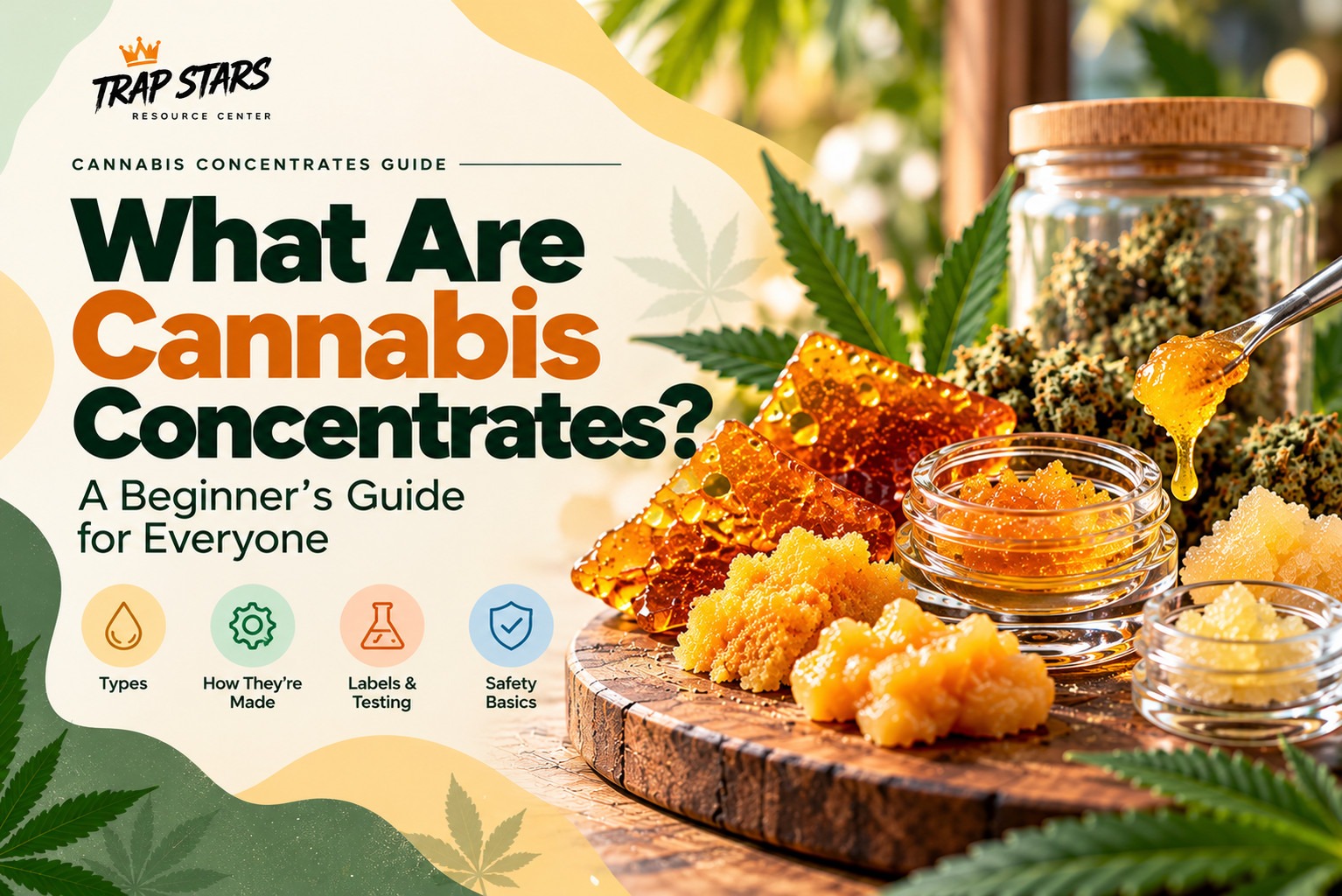
Cannabis concentrates come in many forms, with names such as wax, shatter, live resin, rosin, and distillate. Although these products share certain characteristics, their ingredients, textures, and production methods can differ significantly.
For beginners, understanding what cannabis concentrates are starts with knowing how they differ from traditional cannabis flower. Their cannabinoid concentrations, labeling terminology, and potential health risks also deserve attention.
This guide explains common concentrate types, how manufacturers produce them, what product labels mean, and how Michigan regulates testing within its licensed cannabis market.
What Are Cannabis Concentrates?
Cannabis concentrates are products made by separating and concentrating selected compounds from cannabis plant material. These compounds may include cannabinoids, terpenes, and other naturally occurring plant constituents.
Manufacturers use different processing methods to create concentrates with varying textures and chemical compositions. Some resemble thick oils, while others appear brittle, granular, or wax-like.
The terms cannabis concentrate and cannabis extract often overlap. However, extraction generally refers to a process that separates compounds from plant material, while concentrate describes the resulting material.
Common characteristics include:
1. Higher cannabinoid concentrations than many flower products
2. Different textures, including oils, solids, and semi-solids
3. Production through solvent-based or solventless processes
4. Product names that reflect texture, processing, or ingredients
Not every concentrate contains the same cannabinoids or produces the same effects.
How Are Cannabis Concentrates Different From Cannabis Flower?
Cannabis flower consists of harvested, dried, and often cured plant material. Concentrates undergo additional processing to separate and collect selected compounds.
As a result, concentrates frequently contain higher concentrations of cannabinoids, particularly THC.
| Feature | Cannabis Flower | Cannabis Concentrates |
|---|---|---|
| Basic form | Dried plant material | Processed, concentrated material |
| Processing | Harvesting, drying, curing | Extraction or mechanical separation |
| Texture | Plant buds | Oil, wax, resin, or solid |
| Cannabinoid concentration | Varies by product | Often higher, but varies |
| Common terminology | Flower, bud, cultivar | Wax, shatter, rosin, distillate |
For more background on plant material and labeling terminology, read our guide to cannabis flower types and common terminology.
What Are the Different Types of Cannabis Concentrates?
Concentrate names can describe consistency, processing methods, or characteristics of the starting material. Therefore, two products with similar names may still have different chemical profiles.
Wax and Budder
Wax generally describes concentrates with a soft, wax-like consistency. Budder refers to a smoother, creamier texture.
Both terms describe physical characteristics rather than fixed cannabinoid concentrations. Their composition depends on the source material and processing conditions.
Shatter
Shatter is a concentrate known for its firm, sometimes glass-like appearance. It may break into brittle pieces when handled.
Its texture can vary with temperature, formulation, and storage conditions. A transparent appearance does not automatically indicate superior purity or safety.
Live Resin
Live resin generally refers to a cannabis extract made using fresh-frozen plant material rather than conventionally dried and cured flower.
This processing distinction may influence the resulting terpene profile. However, the final chemical composition depends on several factors, including the plant material and extraction process.
Rosin and Live Rosin
Rosin is a solventless concentrate produced through mechanical separation involving heat and pressure.
Live rosin generally begins with fresh-frozen cannabis material, often processed into hash before further concentration.
The word live describes the starting material and processing approach. It does not establish a universal standard of potency or quality.
Cannabis Distillate
Distillate is a refined cannabis extract containing a concentrated fraction of particular cannabinoids.
Some distillates contain relatively little of the original plant's terpene profile. Manufacturers may formulate finished products with additional ingredients.
Distillate can appear in different regulated product formats, including certain vape cartridges and infused products.
Crumble and Sugar
Crumble describes a dry, crumbly concentrate texture. Sugar typically refers to a granular or crystalline-looking consistency.
These names describe appearance rather than a specific production method. Consequently, ingredient information and laboratory results provide more useful details than texture alone.
How Are Cannabis Concentrates Made?
Manufacturers use several processes to separate cannabinoids and other compounds from cannabis plant material.
Solvent-Based Extraction
Solvent-based methods use processing substances to separate selected plant compounds. Licensed manufacturers must follow applicable production and safety requirements.
Depending on the product category, Michigan's testing framework includes residual-solvent analysis.
Solventless Concentration
Solventless methods rely on mechanical processes rather than chemical extraction solvents.
Examples include ice-water separation and heat-and-pressure techniques used in rosin production.
However, solventless does not mean that a product is automatically contaminant-free. Starting materials, equipment, handling, and testing still matter.
Live Resin vs. Rosin vs. Distillate: What's the Difference?
These three names are common, but they describe different characteristics.
| Concentrate | Main distinction | Important consideration |
|---|---|---|
| Live resin | Extract associated with fresh-frozen cannabis | Composition varies by processing |
| Rosin | Mechanically produced, solventless concentrate | Starting material affects the result |
| Distillate | Refined cannabinoid-rich extract | May have a different terpene profile |
A product can also combine characteristics associated with different categories.
For example, live rosin describes both the starting material and a solventless processing approach.
Therefore, these terms should not be treated as a simple ranking from best to worst.
What Do THC, CBD, and Terpenes Mean on Concentrate Labels?
Cannabis concentrate labels may report several chemical components.
THC (tetrahydrocannabinol) is the primary intoxicating cannabinoid commonly associated with cannabis.
THCA (tetrahydrocannabinolic acid) is a cannabinoid precursor that can convert to THC through decarboxylation, including during heating.
CBD (cannabidiol) is a cannabinoid that does not produce the same characteristic intoxicating effects as THC.
Terpenes are aromatic compounds found in cannabis and many other plants. Their presence contributes to product aroma, but terpene information alone cannot reliably predict an individual's experience.
A concentrate label may display:
1. THC, THCA, CBD, or other cannabinoid concentrations
2. Net product weight
3. Product identification and batch information
4. Testing or laboratory information
5. Required regulatory warnings
6. Terpene information, when provided
A higher reported THC percentage does not independently establish product quality, safety, or the experience someone will have.
How Do Concentrates Relate to Vapes, Pre-Rolls, and Edibles?
A concentrate describes a type of cannabis-derived material. Meanwhile, a vape, pre-roll, or edible describes a finished product format.
These categories sometimes overlap.
For example, certain vape cartridges contain cannabis extracts. Our guide explaining how cannabis vapes work covers the components and terminology used for those devices.
Similarly, some infused pre-rolls combine flower with concentrated cannabis ingredients. Learn more about cannabis pre-roll types and ingredients.
Concentrates can also be ingredients in certain edible formulations. Our cannabis edibles guide explains how those finished products differ from inhaled formats.
Understanding the distinction helps readers interpret product descriptions more accurately.
What Should Beginners Know About Concentrate Potency and Effects?
Cannabis concentrates can contain substantially higher THC concentrations than many flower products.
However, concentration is only one factor affecting exposure. Product composition, method of use, individual sensitivity, and previous cannabis exposure also matter.
According to the CDC's guidance on cannabis use disorder, highly concentrated THC products may produce stronger intoxicating effects and increase the risk of overconsumption.
Potential effects and adverse reactions can include:
1. Changes in attention, memory, and coordination
2. Impaired judgment and reaction time
3. Anxiety, panic, or paranoia
4. Increased heart rate
5. Unpredictable or unpleasant intoxication
Importantly, researchers have not established the full long-term consequences of exposure to highly concentrated THC products.
For a broader explanation of individual responses, see Cannabis Effects for Beginners.
How Are Cannabis Concentrates Tested in Michigan?
Michigan's Cannabis Regulatory Agency (CRA) oversees the licensed cannabis market, including safety-compliance testing.
Its Scientific Section oversees licensed laboratories and explains the state's Metrc product-tracking framework.
Michigan's testing requirements vary according to product classification.
Depending on the category, applicable testing can include:
1. Cannabinoid potency analysis
2. Heavy-metal screening
3. Residual-solvent analysis
4. Chemical-residue testing
5. Other required safety-compliance assessments
The CRA's Sampling and Testing Technical Guidance distinguishes non-solvent concentrates, solvent-based inhalable concentrates, and vape concentrates.
Testing requirements do not mean that cannabis products are risk-free. They establish regulatory compliance standards within the licensed market.
What Are the Health and Safety Considerations of Cannabis Concentrates?
Concentrates deserve particular attention because their cannabinoid concentrations can be high.
The CDC's cannabis health guidance identifies potential effects on brain function, cardiovascular health, and the risk of cannabis use disorder.
Inhaled concentrates may also involve respiratory exposure to aerosols or other substances. Product ingredients and manufacturing quality can affect those risks.
Additionally, cannabis-related impairment makes driving or operating machinery unsafe.
Products should be stored securely and kept away from children and pets. Packaging should not be treated as a substitute for secure storage.
Before interpreting a product label, readers should distinguish verified laboratory information from marketing claims.
For additional beginner-focused product considerations, see Cannabis Buying Guide for Beginners.
Frequently Asked Questions About Cannabis Concentrates
Are Cannabis Concentrates Stronger Than Flower?
Cannabis concentrates often contain higher THC concentrations than cannabis flower. However, potency varies across products. THC percentage alone does not determine the full effects, quality, or safety of a concentrate.
Is Live Resin the Same as Live Rosin?
No. Live resin generally involves extraction from fresh-frozen cannabis material. Live rosin also uses fresh-frozen material but involves solventless mechanical processing. Their composition and production characteristics differ.
Do All Cannabis Concentrates Contain THC?
No. Some concentrates primarily contain CBD or other cannabinoids. The actual composition depends on the starting material and manufacturing process. Laboratory-reported cannabinoid information is more reliable than assumptions based on product names.
What Does Full-Spectrum Mean on a Concentrate Label?
Full-spectrum is commonly used to describe products containing multiple cannabis-derived compounds. However, the term does not guarantee a specific chemical profile. Consumers should examine the actual ingredient and cannabinoid information.
Are Cannabis Concentrates Tested in Michigan?
Cannabis concentrates sold through Michigan's licensed market are subject to applicable CRA testing requirements. Specific tests depend on product classification. Regulatory testing helps assess compliance but does not eliminate every possible health risk.
Conclusion
Understanding what cannabis concentrates are becomes easier when product names are separated into three categories: processing methods, physical textures, and chemical composition.
Wax, shatter, resin, rosin, and distillate do not represent identical products. Likewise, higher THC concentrations do not automatically indicate better quality.
For beginners, the most useful information comes from accurate terminology, cannabinoid labels, regulatory testing, and an understanding of potential health risks.
